
Tag Archives: Real-time PCR

Real-Time PCR Troubleshooting: Late Ct Values, No Amplification & Contamination

Real-time PCR troubleshooting featuring amplification curves, a PCR instrument, and common issues including late Ct values and contamination.

Every laboratory running real-time PCR eventually encounters unexpected results: a flat amplification curve, Ct values that shift later than expected, or amplification in a no-template control (NTC). These problems can originate from sample quality, extraction, reagents, assay setup, or instrument settings. Identifying the cause requires a systematic approach rather than changing multiple variables at once. […]

Nucleic Acid Extraction for PCR and NGS: Methods, Quality Control, and Best Practices

Nucleic acid extraction for PCR and NGS showing a laboratory pipette, sample tube, and automated purification equipment.

When a real-time PCR run produces unexpectedly high Ct values or an NGS library fails quality control, the problem may start before amplification or sequencing—with nucleic acid extraction. DNA and RNA extraction is a critical step in molecular workflows. Poor recovery, contamination, or inhibitor carryover can affect downstream results, even when assays and instruments perform […]

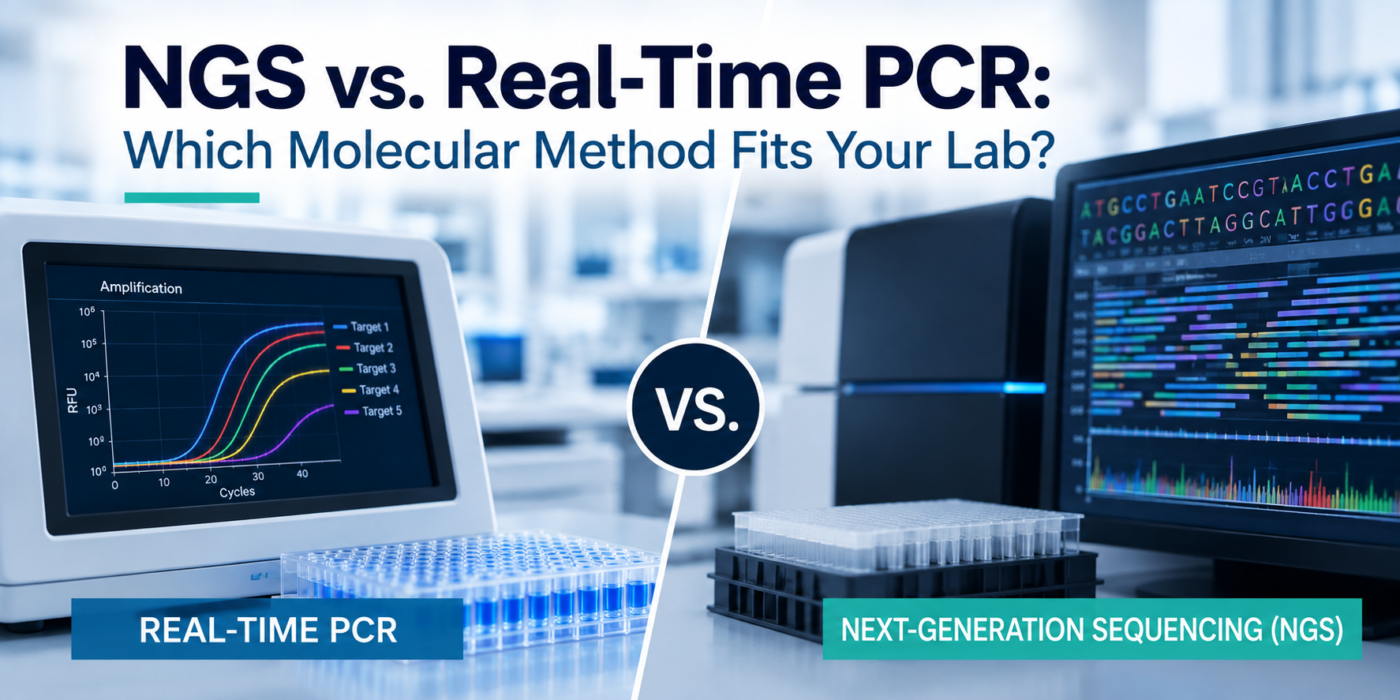
NGS vs. Real-Time PCR: Which Molecular Method Fits Your Lab?

NGS vs. real-time PCR comparison for molecular laboratory workflows

Real-time PCR and next-generation sequencing answer different molecular questions. Compare target coverage, throughput, workflow complexity, data analysis and other considerations when choosing an approach for your laboratory.

Real-Time PCR: the Key to Rapid Detection of Infectious Agents

Real-Time PCR

Real-Time Polymerase Chain Reaction (real-time PCR) has revolutionized the diagnosis and management of infectious diseases in acute care settings. Through the coupling of the amplification and direct detection of target microbial DNA in a single reaction vessel, real-time PCR drastically reduces the need for microbial culture methods, decreases wait times required for pathogen detection, and […]