
Tag Archives: Next-Generation Sequencing

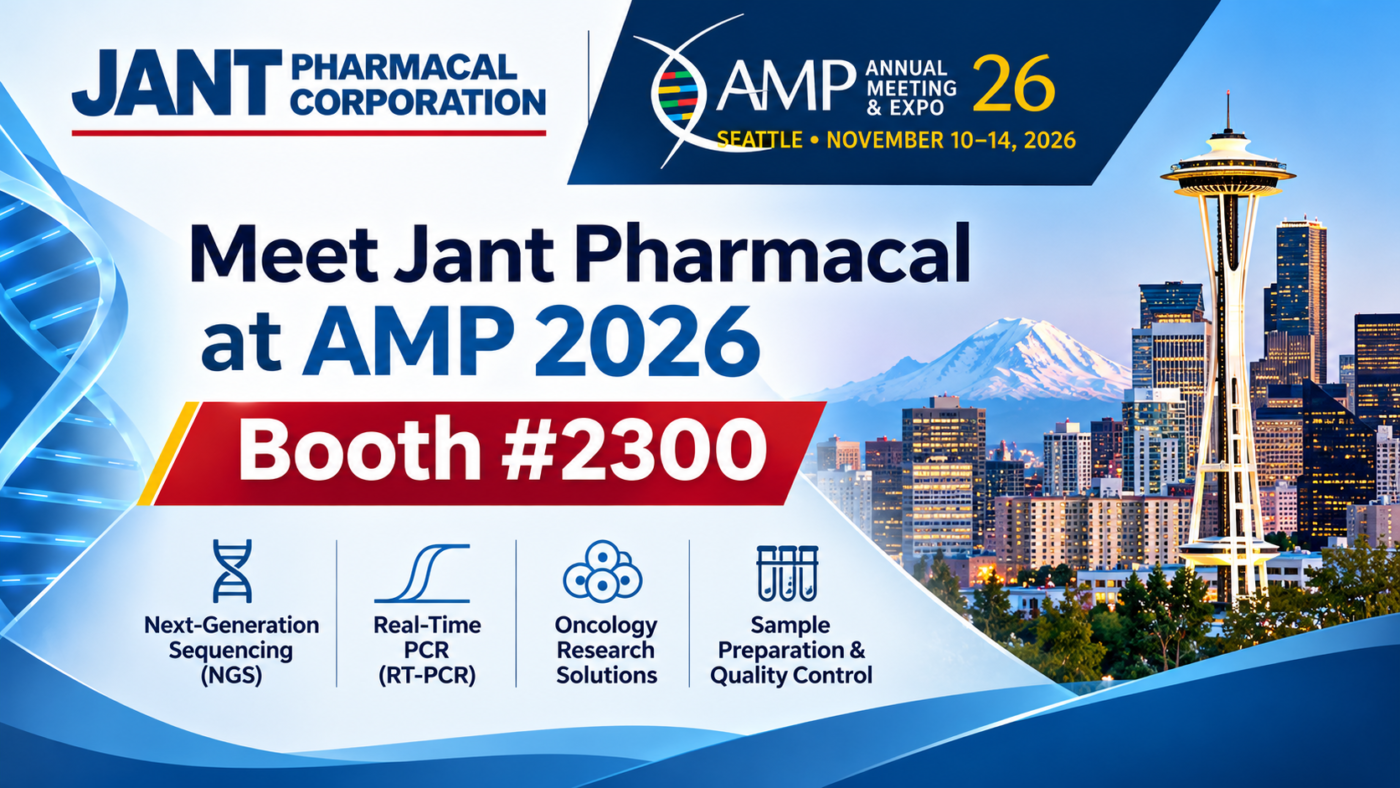
Meet Jant Pharmacal at AMP 2026 – Booth #2300

Jant Pharmacal exhibiting at AMP 2026 in Seattle, November 10–14, Booth 2300

Jant Pharmacal Corporation is pleased to announce that we will be exhibiting at the Association for Molecular Pathology (AMP) 2026 Annual Meeting & Expo, taking place November 10–14, 2026, in Seattle, Washington. Visit us at Booth #2300 to explore our growing portfolio of molecular testing and research solutions, including next-generation sequencing (NGS), real-time PCR, and […]

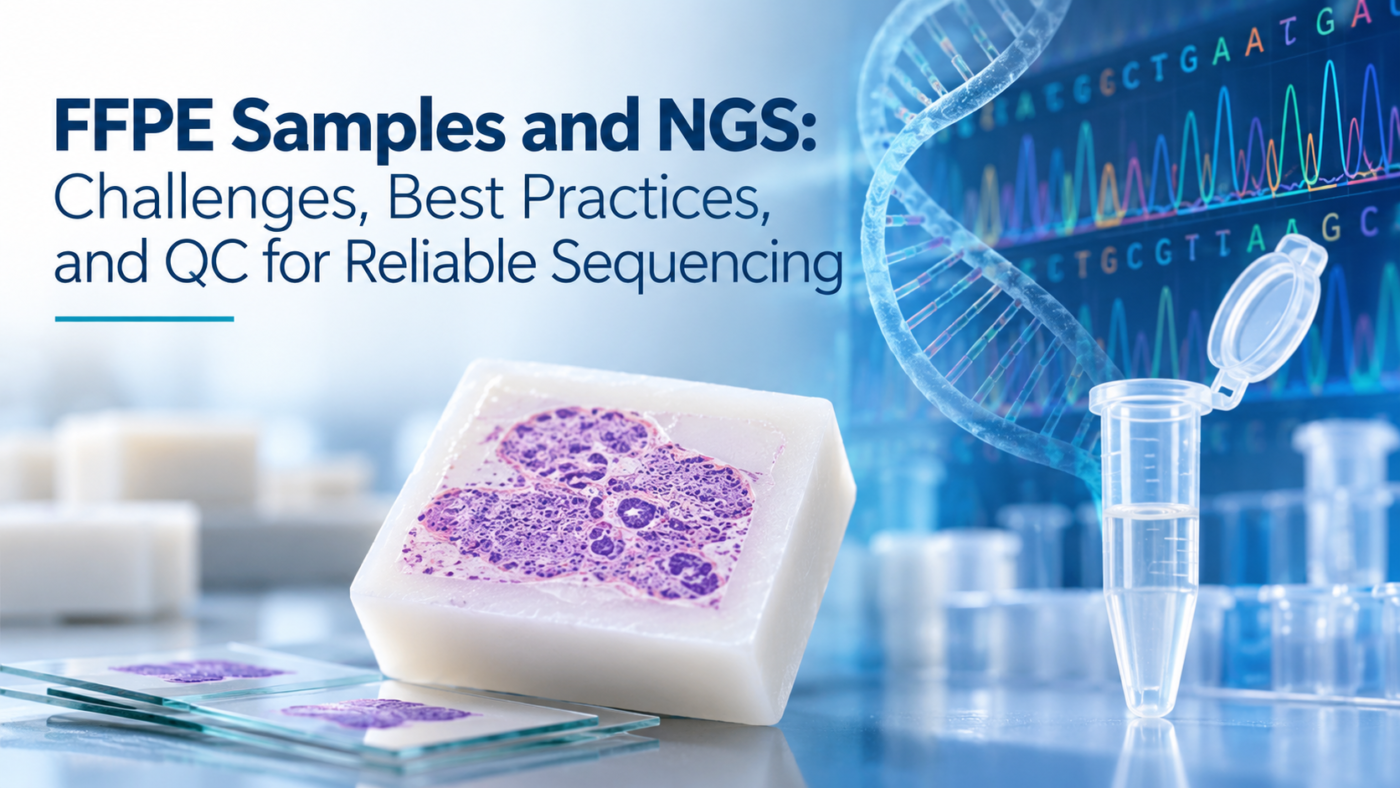
FFPE Samples for NGS: Challenges, Quality Control & Best Practices

FFPE tissue block and histology slides with DNA sequencing graphics illustrating NGS sample preparation and quality control.

Formalin-fixed, paraffin-embedded (FFPE) tissue is widely used in cancer research and molecular oncology. Pathology archives provide valuable specimens for studying genetic alterations, but preparing these samples for next-generation sequencing (NGS) presents unique challenges. The same formalin fixation process that preserves tissue morphology can also fragment and chemically modify DNA and RNA. These changes may affect […]

Nucleic Acid Extraction for PCR and NGS: Methods, Quality Control, and Best Practices

Nucleic acid extraction for PCR and NGS showing a laboratory pipette, sample tube, and automated purification equipment.

When a real-time PCR run produces unexpectedly high Ct values or an NGS library fails quality control, the problem may start before amplification or sequencing—with nucleic acid extraction. DNA and RNA extraction is a critical step in molecular workflows. Poor recovery, contamination, or inhibitor carryover can affect downstream results, even when assays and instruments perform […]

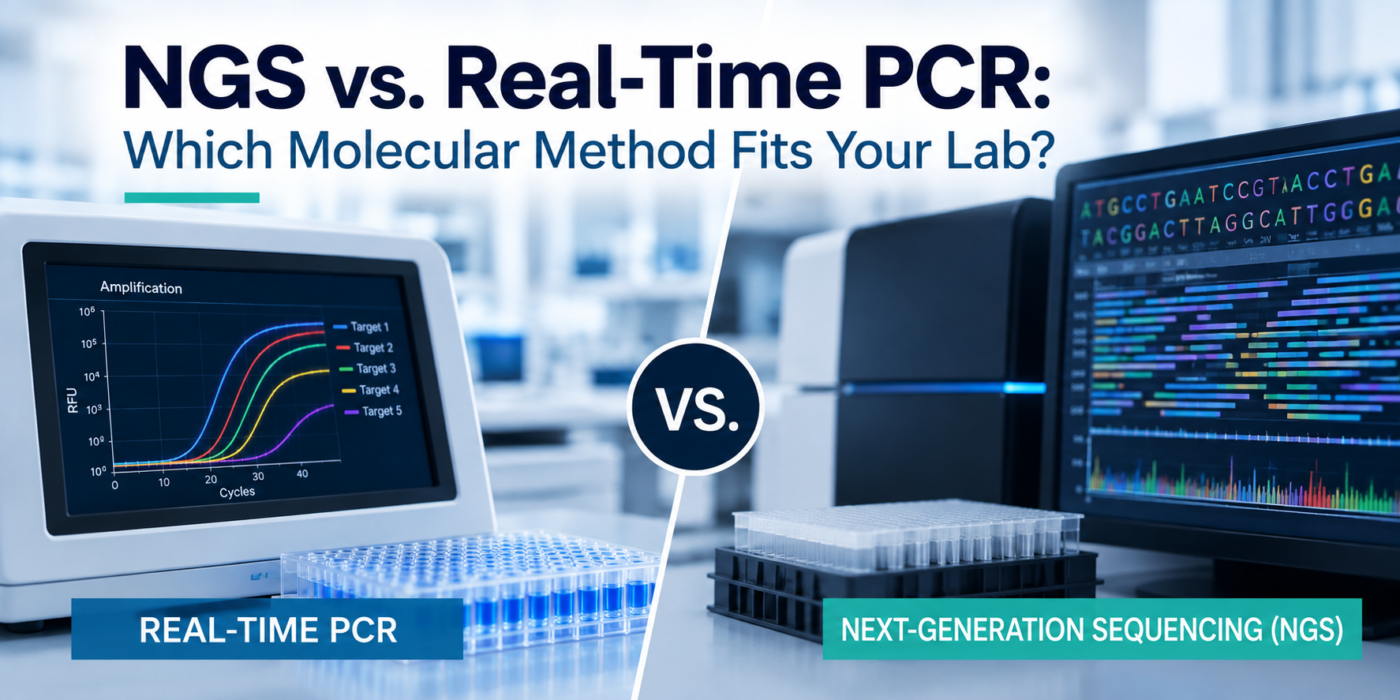
NGS vs. Real-Time PCR: Which Molecular Method Fits Your Lab?

NGS vs. real-time PCR comparison for molecular laboratory workflows

Real-time PCR and next-generation sequencing answer different molecular questions. Compare target coverage, throughput, workflow complexity, data analysis and other considerations when choosing an approach for your laboratory.